One thing I like about my thought process is how I pursue the ideas that I gravitate towards subconsciously. This is an example of how first impressions are often the best ones; I work better if I don't have to think too hard to squeeze something out of a topic. When the ideas come, it's good to work with them. Maybe something I could change about my thought process is giving myself more time to come up with ideas before I make a decision. We'll see how my thought process evolves as I get past the evidence plan stage of this essay!
Saturday, September 27, 2008
Metacognition: Kite Runner Essay
This is a weird feeling... thinking about how I think. Hopefully, I will be able to recall my thought process for the Kite Runner essay project. I know that I chose my original ideas by looking over the essay/discussion questions and seeing if any ideas popped out at me as I read. If my mind latched onto an idea, topics for an essay related to that idea would begin to flow through my head, and I would attempt to pick out the good ones. Then I would force my mind to find ideas that I could work with. Eventually, I came up with 3 possible ideas, and when I conferenced with you/Mr. Allen (should I be talking in 2nd person?), I realized that my idea about repetition in relation to closure was my most original, personal, and natural idea. You/ Mr. Allen (this is really confusing) helped me come up with the 3 main ideas for my essay: refrains, ideas, and parallels. Once I had these 3 ideas, I knew what to look for, and proceeded to find the passages I needed from the book.

Sunday, September 21, 2008
Best of Week: Short Sentences
It is possible. Truly, it is. It is possible to speak eloquently and intelligently without the constant use of long, drawn-out sentences. I can do it! I can speak with varied sentence lengths :) Anyway, I think that the best topic we covered this week was the Artful Sentences method of "artfully" using short sentences to make a point in writing. After learning about it, I subconsciously picked out the use of this technique as I read The Kite Runner. Related to the short sentences technique is the skill of using a form of the verb "to be" in these sentences. I had learned about varied sentence lengths before, but I never realized just how short and elementary we could make sentences in our writing! "subject"-"verb"-"adjective (if necessary)" It's crazy! I am extremely happy to have learned this technique. I can make myself a better writer. It's easy. Now I know how to do it! Of course, I have much more to learn, but now I will search for the use of short sentences in my reading, and hopefully, I will be able to successfully apply it to my writing! I really think this discussion of sentence length was very beneficial to our class because it is great knowledge to have, and it was exciting! We were excited. About writing. Who would have thought? I am definitely looking forward to reading more Artful Sentences throughout the year and then beginning to write!
Saturday, September 13, 2008
Change of Mind: Poetry
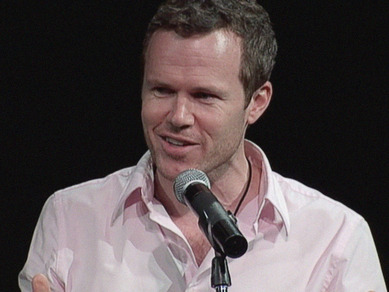
Before seeing Rives's TED poem, I always thought of poetry as either rhyming lines in an ABAB pattern, or free verse pieces with such depth and metaphor that their message is buried beneath the surface. Mockingbirds was neither of these. The message was clear, but the words and the delivery were totally different from what I used to think of as traditional poetry. Yes, there was rhyming, but it was subtle and arbitrary. And the mockingbirds were used as a metaphor, but the metaphor was not intimidating or difficult to grasp. The delivery was so natural it was almost as though the poet was just having a normal conversation. The whole thing flowed like a song and the timing was so perfect; it kept me hooked.
To be honest, I have never like writing (and, frankly, reading) poetry. It always made me feel incredibly inferior and unintelligent because during writing, I could never come up with intelligent metaphors or make myself sound smart enough, and during reading, well, I couldn't understand poetry at the depth at which it was intended to be understood. Now I have a whole new outlook on poetry. This type of slam poetry is my kind of poetry. It doesn't require exceptional intelligence or vocabulary; rather, it asks for artful manipulation of language, which I think I could handle more easily. If I could learn to write like this, I wouldn't be intimidated by poetry anymore. I really would like to hear more of this kind of poetry to help me understand it and appreciate it even more.
Subscribe to:
Posts (Atom)